
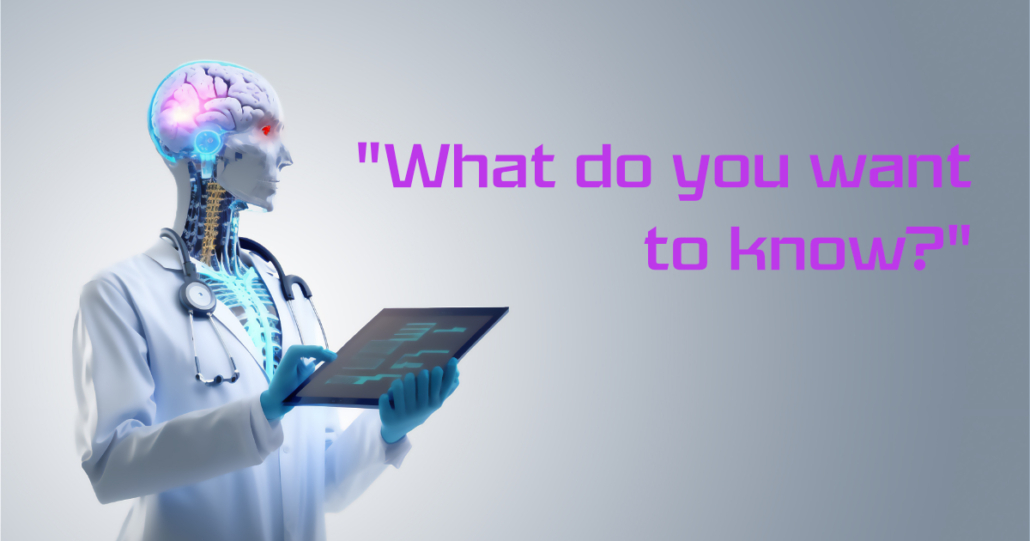
Artificial Intelligence? Focus on Artificial
Recently, I researched a topic on PubMed, the government database of published scientific research. There was a posting on the home page that the National Center for Biotechnological Information would be down for usual maintenance. That’s something we’ve come to expect from just about any database-based website.
But it made me pause for a few minutes. When I use AI to research a topic, I’m not really interested in what it says; I’m interested in the research the AI used to formulate its answer. For topics I search for, the research has to include scientific research from PubMed and other science databases. I ignore comments based on information from other websites that are based on interpretation of research rather than the research itself.
What occurred to me were these questions:
- What if studies on some topics were intentionally left out of the database? That means that we would not be getting the full research on important health conditions and treatments.
- What if some studies that were not peer-reviewed were added to the database? If that were to happen, a researcher with enough familiarity with prior research might be able to understand that something isn’t right, but people looking for answers for their own health and disease might accept what AI produced.
If you use AI to search for answers related to health and disease, check the references the AI provides. Here is my ranking of references you can use as a guideline by degrees of importance:
First degree
The actual research paper(s). You can read the abstract if nothing else.
Second degree
The press release hitting the highlights about the research, typically from the laboratory or agency that did the research.
Third degree
A credentialed health expert’s evaluation of the actual research, although this is subject to bias.
Fourth degree
A comment on the press release by just about anyone with a website or a podcast? Forget it. Use it to find clues to the original research, but don’t base any life changes on it.
As I said, I use the research papers only to verify that AI searched for and found papers related to the topic. Once past that level, there can always be some form of bias in the references.
I’ll leave you with two thoughts:
- First, AI is only as good as the databases it’s allowed to search to find answers. By disallowing certain sources of research, it’s easy to influence the direction of the response.
- Second, artificial means just that. AI can search, prioritize, and use algorithms to perform the search, and it will do it fast. But at the end of the day, it’s artificial—it’s a computer—with no ability to interpret what it’s sending you.
For more perspective, I’ll assign you a movie: watch Terminator again and think about Skynet.
What are you prepared to do today?