What Changed? 2015 vs. 2025 Dietary Guidelines
If you read any of the commentary about the latest dietary guidelines, you would have thought there were radical changes. “Eat or drink full-fat dairy! Use beef tallow! Ultra-processed food should be eliminated!”
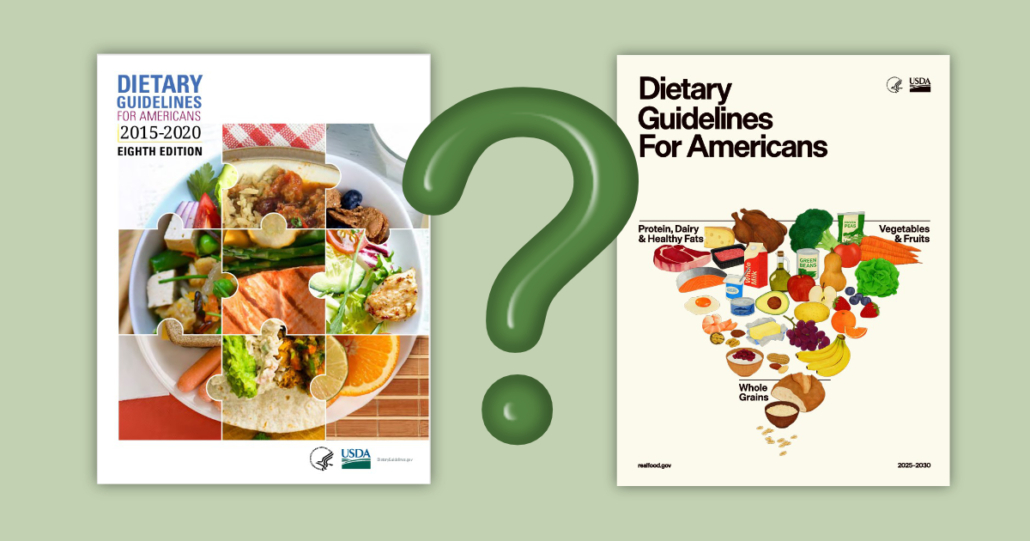
If you took the time to read the synopses, there are very few differences between the recommendations. They still use the same base of 2,000 calories per day. The recommended percentage of fat intake is the same. The same number of fruits and vegetables are recommended—still way too low at two and three respectively. Sodium intake—the same. Eat whole grains, not refined carbohydrates. So where did all the discussion come from? Let’s take a look.
“Higher Protein Intake”
The recommendation is warranted given that we don’t get enough protein, based on the most recent research. If you want more details, purchase my latest webinar Taking Back Your Muscle, Part 2: Protein, and I’ll explain it in detail. Maybe there’s slightly more emphasis on animal protein, but all plant-based sources of protein are given just like they always have been.
Because both sets of guidelines talk about adjusting nutrient intake based on stages of life, there’s an increase of protein recommended at different life stages.
“Full-Fat Dairy and Tallow for Cooking”
Although the focus on these two stirred a lot of online commotion, these are not meaningful changes in the recommendation for consuming dairy products or deep-fat frying in oils. While the commentary reached a high-pitched crescendo, you probably figured out why it was meaningless. If you read the recommendations, in 2015 and 2025 the guidelines say not to exceed 10% of daily calories from saturated fat. One cup of milk would contain five grams of saturated fat, about 25% of the recommended daily intake for the average person. Fry something in beef tallow and depending on the food, that could use up the rest of the day’s fat recommendation. This is not different from the 2015 recommendations in any substantive way.
“Fewer Ultra-Processed Foods”
One more time, there’s no difference in the recommendations for avoiding ultra-processed foods. The 2015 guideline didn’t call them ultra-processed foods, but the pictures definitely show foods high in processed carbohydrates, sugars, and fats.
The Bottom Line
The real problems with the 2015 guidelines are two-fold and will probably happen again for 2025 guidelines:
- Most Americans will never read the synopsis.
- Even if they did, they wouldn’t change their eating habits to a more nutritious diet that’s based on vegetables, fruits, quality protein from all sources, whole grains, and a reasonable intake of fat.
I’ll throw in my two cents and make it even simpler: Eat less. Eat better. Move more. That’s the way to better health.
What are you prepared to do today?



 BurgerOnTheFourth