
Your Heart: Tone
If you live to 80, your heart will beat an average of three billion times. That’s right—billion with a b. Faster when you exercise, slower when you’re at rest, it does its job 24 hours a day, seven days a week. What’s even more amazing about your heart rate is how it’s controlled by the nervous system. I’ve always found it fascinating and here’s why.
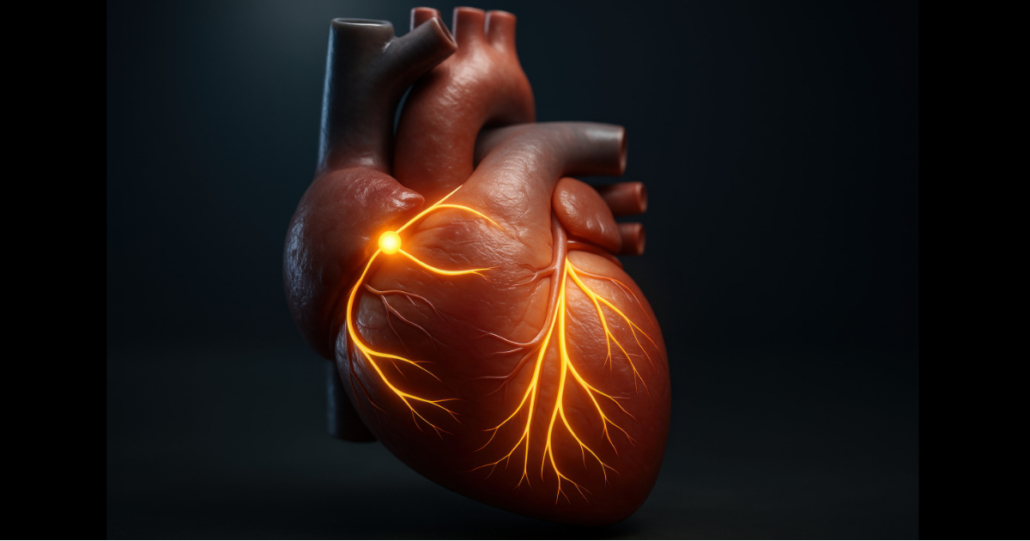
The SA node or pacemaker of the heart we talked about Tuesday normally gets signals from nerves that tell it to slow down and nerves that tell it to speed up; one is inhibitory to slow it down while the other is stimulatory to speed it up, but they’re both sending signals at the same time. Where they balance is called tone and sets your resting heart rate. Start to exercise and more stimulatory impulses come to speed up your heart rate. Stop exercising and more inhibitory are sent until you reach a resting heart rate again. Exercise regularly and your heart can reset the tone at a lower rate by increasing the inhibitory and decreasing the stimulatory. You don’t even have to think about it.
There are other mechanisms that control heart rate, such as the fight or flight hormones. Maybe you think of your heart and decide, “I don’t like your tone!” The good news is you can change it; most of the time the tone you set by your lifestyle is the heart rate you’re going to have.
I hope you know more about your heart than you did before; I think it’s important to know as much as you can about the body your brain lives in. Now go forth and live a heart-healthy lifestyle to keep everything working smoothly.
What are you prepared to do today?