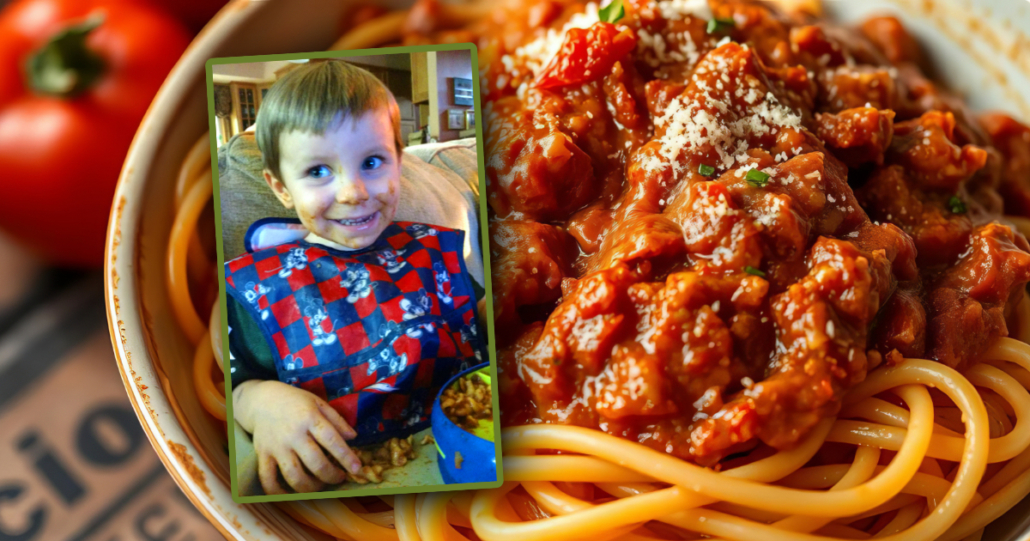
Is Cold Pasta Healthier?
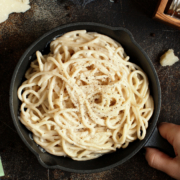
Our grandson Riley has loved pasta since he started eating solid food (that’s him digging into his pasta at two; if his ear looks orange, it’s because his imaginary cell phone rang during dinner), and he often eats it cold. I mean refrigerator cold; he’ll eat it warm if we go out to a restaurant, but he prefers it cold. I don’t mean macaroni salad—I mean cold pasta, preferably with Riley sauce. The Riley sauce is my recipe created for him with a base of a marinara sauce; I grind up onions, garlic, mushrooms, carrots, zucchini, and beef with the grinding attachment for Paula’s KitchenAid mixer and add them to the base along with some additional spices. Then I slow cook it for a couple of hours. He eats that with a spoon (cold, of course) and doesn’t realize all the veggies he’s getting.
But it’s really the cold pasta that may be healthier for him. Why? Doesn’t pasta increase blood sugar rapidly? Sure, if it’s hot. But when pasta is put in the refrigerator for a day or more, a process called retrogradation happens. As the pasta loses water, the remaining molecules lose their original structure and form a new structure. Those turn some of pasta’s sugar molecules into a resistant starch that passes through the body without being digested in the same way. When eaten cold like Riley does, that starch resists digestion until it gets down to the probiotics. There it can be turned into short-chain fatty acids instead of sugar molecules. Those fatty acids are much better for us for a variety of reasons.
As you celebrate the last summer holiday this weekend, keep in mind that pasta might be a dish best served cold. Have a fun Labor Day weekend, and please be safe if you’re traveling anywhere this weekend.
What are you prepared to do today?