The Secret Ingredient
The paper on the physics of fluids was interesting, although the math was way beyond my ability. Researchers from four European countries took part in the research study on Cacio e Pepe to find the precise texture of the pasta, starch content of the water, and temperature of the water to get the perfect sauce from cheese and pasta water (the starchy water in which the pasta’s been cooking).
It all comes down to something called phase separation. That is the critical point where the starchy pasta water emulsifies the cheese so that it becomes creamy instead of separating into a lumpy mess. The scientists called the clumping the mozzarella stage. Not everyone has an Italian grandmother that they can watch and learn from, and nonnas didn’t use fancy instruments to test the water starch content—they knew from experience after making the dish hundreds of times.
If you’ve never thought about the physics of cooking, I’m with you on that. But the interaction of the starch being released from the pasta and visually assessing the starch content to get it right is just that: physics. The number of attempts the scientists used with varying starch content, water temperature, and cheese, and the resultant mathematical calculations to get to a solution were amazing. They actually came up with the correct recipe, but believe me, it’s too complicated to just post because it requires so much explanation. So they looked for another way to prepare the cheese sauce.
The Secret to Cheese Sauce: Sodium Citrate
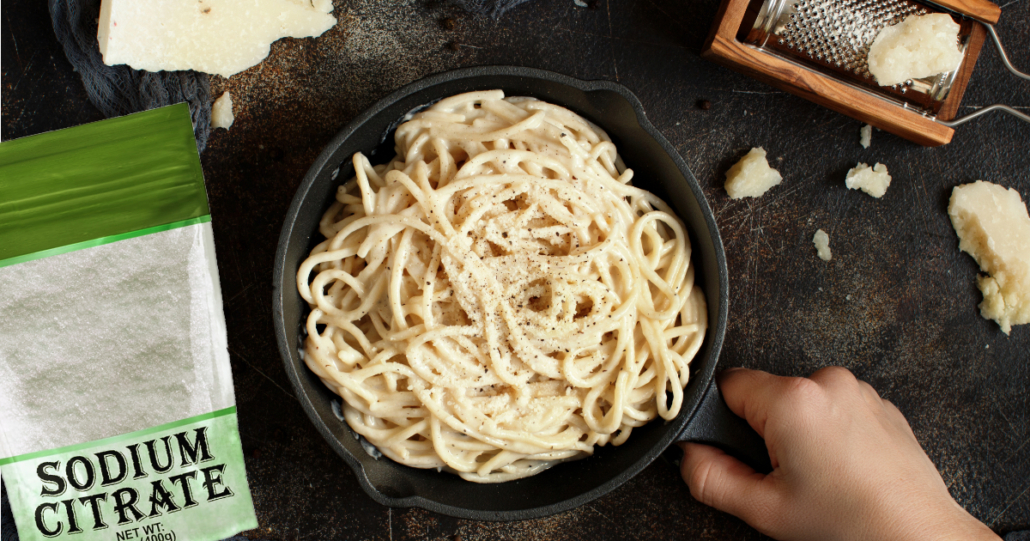
The scientists came up with a natural solution: a natural substance, sodium citrate, that helps with the emulsification of the cheese. That’s the step the physicist chef talked about on the podcast. At the point where the starchy water is added to the cheese, a pinch of sodium citrate will help the emulsification process and instead of goo, you’ll get a creamy and smooth sauce. When I try it, I’ll let you know how it went.
Sodium citrate will add some tartness, but it’s also good for you if you’re not sodium sensitive. The citrate is a natural anticoagulant as well as emulsifier. The stumbling block may be the amount of sodium citrate. The recipe called for a pinch, which is usually an eighth of a teaspoon, but in the amount of pasta for two persons, the scientists used 5 grams, which is almost a teaspoonful.
So even after all the science that went into it, it’s still going to come down to trial and error. But you now have a solution for homemade cheese sauces. Ever try to make your own mac and cheese and end up with clumps? If it works for Cacio e Pepe, it should work for other cheese sauces that may separate.
The Bottom Line
What’s the point to all of this? Cooking enhances the flavor of the simplest ingredients. I would wager that if people knew how to cook better, they would use healthier ingredients. I think we can all relate to hating Brussel sprouts, but when baked with a little cheese and bacon, they’re amazing (check out the recipe on the Health Info page at drchet.com). We can argue whether a three-ingredient pasta dish is healthy, but if cooked properly, we may be satisfied with less, while vegetables cooked properly may mean we eat a little more. Remember, no one ever said that vegetables, fruits, and whole grains had to taste bad. The goal is to eat better. If cooked well, we may eat less.
What are you prepared to do today?
Dr. Chet
Reference: Physics of Fluids 37, 044122 (2025)