Obesity: A Man-Made Disease
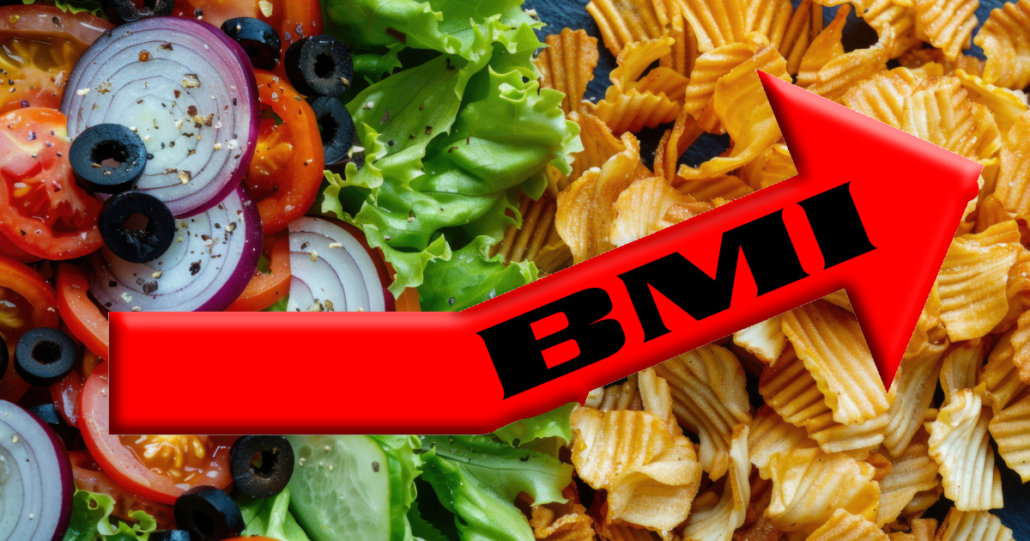
In order to determine whether obesity is an untreatable disease without pharmaceuticals, I took a look at BMI data since 1960. In comparing the BMI of people in the lowest income brackets with the highest income from 1960 through 2024, the lowest income group is always about one BMI unit above the highest income group. The adjusted mean is roughly a BMI of 27 for the poor people versus 26 for the richest people. That continues until the mid-1980s. After that point, the mean BMI continues to rise for the next 40 years—a mirror image with the same one BMI-unit difference.
Mid-1980s
What happened in the mid 1980s that caused the surge in obesity? After checking various sources, there appear to be three factors, not ranked in any particular order.
- The mid-1980s saw increases in two-income families. There are plenty of economic reasons for that, but the net effect was less time spent preparing food in the home and a reliance on convenience food purchases.
- There was an increase in fast-food drive-thrus and take-out foods. Since COVID, there is more reliance on food delivery.
- The mid-1980s saw an increase in ultra-processed foods. Using inexpensive ingredients, particularly carbohydrates and fats, and filled with flavor enhancers that accented the salty and umami, the amount of ultra-processed food has risen to over 50% of the typical American’s diet.
She was asked, “If people stop using GLP-1, will they gain back the weight?” She said yes because there’s no other way to maintain weight loss because of the fat setpoint. I just can’t accept that premise.
The Bottom Line
Overweight and obesity appear to be man-made diseases because of the environment we live in today with so much easily available food. However, I cannot accept that the fat setpoint is permanent. Yes, there are many factors in the brain, the pancreas, and the digestive system that control the feelings of hunger and the anticipation of food, but that doesn’t mean you really need nutrition. You and I just have to learn to ignore those signals that say, “what will my snack be?” when we’re still stuffed from dinner. We must take command. I’m not suggesting it will be easy, but it’s not impossible. In my mind, it’s a lot easier than taking a medication every day for the rest of my life.
What are you prepared to do today?
Dr. Chet
References:
1. Int. J. Environ. Res. Public Health 2024, 21, 73.
2. Stat Pearls. 2025. Obesity and Type 2 Diabetes