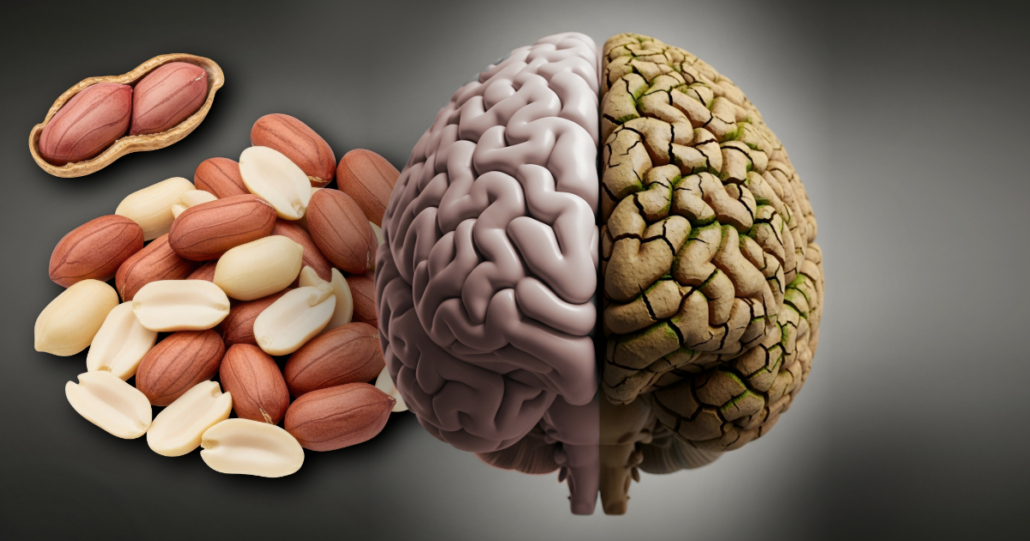
Brain Boon, Not Brainrot
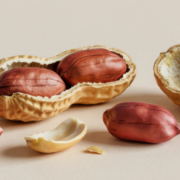
Maybe you’ve been hearing about brainrot; if you have a kid in the house, the odds go way up. My point in mentioning this is to suggest that peanuts don’t contribute to brainrot, but may be a brain boon as I talked about on Tuesday. The question was why?
Nutrients May Hold the Key
Peanuts, as well as other nuts, are high in the amino acid l-arginine. Nitric oxide (NO) increases dilation in blood vessels which help blood flow everywhere but especially to the heart and the brain. We usually associate nitrates from vegetables with that process, but there’s another pathway which uses arginine to increase NO levels as well. That could explain the increases in blood flow to the areas of the brain. The increase in NO could also partially explain the reduction in systolic blood pressure.
In addition, the fiber in peanuts, the antioxidant properties found in the peanut skin phytonutrients, and replacing saturated fats with unsaturated fats may also have an impact on blood flow. The peanut skins contain resveratrol, a phytonutrient that has shown promise in reducing cardiovascular disease in general.
Carbohydrate intake increased while fat decreased during the eating-peanuts phase of the study. One of the key findings was that the unsaturated fats in the nuts replaced some of the saturated fats in the diet. Overall, the peanuts were beneficial.
Limitations with Hope
This was a small study with essentially healthy older adults; how that might work for people with disease must still be tested. The cost of the methodology using special MRI analytics limited how many subjects would be realistic to study, but there were at least some benefits in every category they tested. This shows that modifying the diet in just one area may be a step toward improving your health. There’s no reason not to try eating peanuts (unsalted or lightly salted is preferable) to see how it impacts us personally.
What are you prepared to do today?
Dr. Chet
Reference: https://doi.org/10.1016/j.clnu.2025.10.020