
Dr. Chet’s Health Memos
 If it’s in the health news today, I’ll be writing about it as soon as I read the research, both old and new. With my email Health Memos, you’ll know more about making lifestyle choices that will help you get and keep good health. These free, concise updates on health are emailed to subscribers twice a week. Subscribe today and get a free MP3, in English or Spanish, of Dr. Chet’s Top Ten Tips—Small Changes for a Healthier Life.
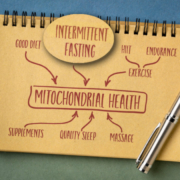
How Fasting Impacts Your Mitochondria
The research scientist in the webinar focused on mitochondria and aging in his part of the presentation. He has helped research and develop a nutrient that appears to help with mitophagy, the process of removing and replenishing old mitochondria. The naturally produced chemical is called urolithin A. It’s produced naturally by the microbiome in response […]
Dietary Supplements: Certified
Recently I watched a webinar on mitochondrial health and athletic performance co-sponsored by the American College of Sports Medicine and a nutritional company. The speakers were a clinical researcher and a PhD dietitian for a professional basketball team. I’m going to review what the clinical researcher talked about on Saturday. Today I’m going to focus […]

How Coffee Relates to CVD
Researchers in Germany used a unique approach in the Hamburg City Health Study: they selected the first 10,000 volunteers. Volunteers who didn’t drink coffee were eliminated from the study, so they ended up with 9,009 subjects. The researchers collected dietary data along with a variety of other demographic and physiological variables, integrating lifestyle-related behavior, comorbidities, […]

Research Update: Coffee and Heart Rhythms
In one of the first jobs I ever had, the foreman would pour a half-cup of coffee and fill it up with water; he’d had a heart attack and his doctor told him to limit his coffee intake. Fifty years ago, physicians recommended that people avoid coffee if they had high blood pressure or had […]
Dealing with the Chemicals in Our Lives
We began this journey with the EWG Dirty Dozen, examined common chemicals we come in contact with such as TCE, and looked at the latest threat—PFAS. These chemicals are ubiquitous, so we’re left with the challenge of how to protect ourselves. In reality, this is nothing new. Every home and business dumped waste into the […]
Chemicals in Our Water
Here’s one for you to mull over. We’ve been exposed to this chemical group since the 1940s. It’s not just one chemical such as TCE from Saturday’s Memo; there are thousands of forms of these chemicals. Based on samples from large groups of people, over 98% of us have them in our bodies; they’re found […]
Chemicals in Our Environment
We have always lived in a world of chemicals. Some were always part of the planet, such as water and the minerals in the earth; more and more, they’re made by humans when they convert raw materials into chemicals that we can use. As you can imagine, the problem is that whether raw or processed, […]

Chemicals in Foods
The last Memo focused on nutrients from foods versus nutrients from supplements. Coincidently, a long-time reader sent me a link to an article about the Dirty Dozen, recently published by the Environmental Working Group (EWG). Paula also sent me articles to read on our exposure to chemicals in cleaning products and our environment. As a […]

Food or Supplements? Yes!
The results of the polyphenol study examining the impact on cardiovascular (CVD) risk factors were mixed. Here’s what the researchers found: The Upside Polyphenols in foods and supplements were effective in reducing risk factors for CVD, both independently and when combined. This wasn’t a seminal paper that changes approaches to nutrition forever, but there were […]
Food or Supplements?
One of the changes I’ve made in selecting topics to write about in these Memos is to read the table of contents of the scientific journals to which I subscribe, especially the nutrition journals. It’s easier to see what’s controversial by looking at news feeds, but they miss a lot of positive nutrition science. One […]